)
|
|
The
distribution and structure of the castles, villages and towns of
Tuscany, Italy,
retain the imprint of its bellicose past more than in many other parts of
Europe. This is in part due to the simple fact that stone suitable for building
is abundant and stone structures persist. And in part, the demands of
effective defense have meant that a great many of the ancient inhabited nuclei in Tuscany are "hill towns".
Tuscan hill towns are mostly built around castles and other
fortifications, or are themselves entire fortified villages. "The hills of
Tuscany", "the hills of Chianti" are the titles of
innumerable introductions to Tuscany. Strangely enough, the districts of Tuscany
and very often the names of the towns themselves refer not to ranges of
hills but to the
valleys they overlook. This makes sense when we remember that the paths
of communication between hills towns are by necessity along the valley
floors. Armies as well as simple trading wagons rarely make their way
along mountain ridges. Towns located on valley floors came into
prominence with the renaissance, modern defences and the expansion of
trade.
|
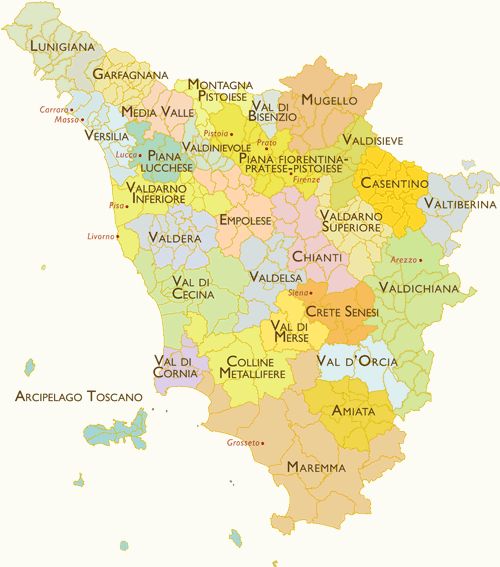
A Geography of the Valleys of Tuscany
|
|
|
|
|
Click the link for a range of excellent Bed and Breakfast in Chianti accommodation options.
|
Valleys of Tuscany © ammonet InfoTech 2008 - 2023. All rights reserved.